
Multiplying a Mission: What Makes a Franchise Concept Stand Out
Oct 21, 2026

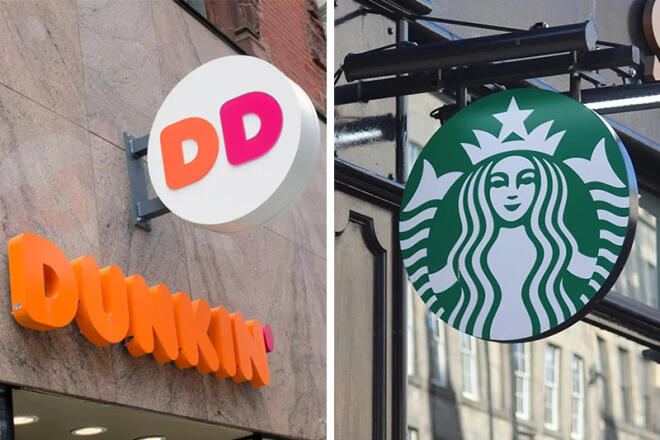
Dunkin’ versus Starbucks – it's a mash-up for the history books. Besides branding, messaging, and product differences, these arch-enemies share another vital differentiator. While Starbucks largely operates via company-owned locations, Dunkin almost exclusively operates through a franchise model. Setting coffee roast preferences aside, we're taking a deep dive into all the reasons franchising gives Dunkin’ an advantage over its major competitor.
Starbucks – A Corporate (And Licensed) Force with Artisanal Appeal
Starbucks devotees will be the first to tell you, the coffee creations aren’t the only reason they choose the international coffee house chain. When its founders opened the first location, nestled in the heart of Seattle’s Pike’s Place Market, they set out to create a community, and the secret recipe wasn’t perfectly sourced beans, but the development of a unique customer experience. Starbucks transformed coffee from a mere functional staple to a meaningful nexus for connecting others.
By leveraging a human-centric position, Starbucks began evolving into the global coffee brand we all know today. Despite its artisanal, neighborly approach, the business’s path to growth was and has been facilitated using corporate expansion (mostly).
More than half of Starbucks locations are considered corporate-operated units. Part of curating such a distinct customer experience hinges on consistent, high-quality products and service. A corporate expansion model ensures Starbucks can bring these principles into every location. In practice, it looks like top-tier Masterna espresso machines, “Starbucks experience” training for new baristas, predefined suppliers, and a uniform storefront brand style.
Even so, bringing this level of consistency to every location, in every market, requires substantial capital investment, higher operating costs, and risk assumption on the part of Starbucks’s corporate. The emphasis on uniformity can also restrict individual Starbucks locations from adopting any local flairs or culture in favor of its “corporate” identity.
Outside of corporate units, the remainder of Starbucks storefronts fall under the category of licensed sites, including stores found in airports, grocery stores, hotels, and on college campuses. These locations can diverge from corporate-run locations in several ways such as different hours, a limited menu, or customer service techniques. While Starbucks notably enforces strict licensing standards, these locations are much more susceptible to brand discontinuity than corporate-operated locations.
Dunkin’ Runs on Franchising
The Starbucks story appears to make a compelling case for corporate business expansion, but before jumping in head first, let’s take a closer look at another well-known coffee brand – Dunkin’.
Dunkin’ offers a totally different experience than its competitor. Targeted toward everyday commuters and passerbys, this coffee shop chain embraces the quick service restaurant (QSR) lifestyle. Rather than create a place for human connection, Dunkin’ understands you have places to be and people to see. With convenient, speedy service at the helm, alongside value price points, Dunkin’ has set itself up as the choice for busy individuals looking to enjoy a quick coffee (and maybe some breakfast delights) before work or during an errands run.
Nearly 100% of Dunkin’ locations operate as franchises. As the parent corporation, Dunkin’ provides the list of approved vendors and suppliers, curates existing and new menu items, establishes training programs and standards, and oversees that brand style and commitments are upheld. In return, franchisees take on the responsibility of the initial investment, daily operations, hiring and managing staff, and fulfilling any local store marketing needs.
The franchising model provides Dunkin’ a stable path for rapid expansion. With each new location, Dunkin’, as the franchisor, receives a new stream of income through the royalty fee (~5.9%) while the franchisee pays the franchise fee ($40,000 to $90,000) as well as the startup investment ($530,0000 to $1.2 million).
By using a franchise structure, Dunkin’ also maintains substantially lower costs and expenses in opening and operating locations. Instead, franchisees are responsible for all of the costs and expenses associated with their location(s). This includes equipment, fixtures, furnishings, leasehold improvements, ingredients and other inventory items, employee wages, utilities, and rent. By contrast, Starbucks assumes all of the costs and expenses for every corporate location, adding to its risk and day-to-day involvement.
The Answer is Thorough Franchise Development
Starbucks and Dunkin’ have some of the strongest brand recognition in the nation, yet they arrived at that level using vastly different expansion strategies. From the outset, many might immediately point to Starbucks, which directly runs about 21,000 stores through a corporate expansion strategy. Across thousands of stores, the coffee community builder has maintained extreme control over its branding, services, products, and procedures to create a cohesive customer experience.
Yet, the same could be said for Dunkin’ — a brand that’s grown almost exclusively through franchising. Even with more decentralized control over its locations, the QSR coffee giant has still curated an identifiable brand from its loud pink and orange colors to its delicious assortment of donuts to consistent brews.
A common concern for would-be franchisors is brand consistency. They worry that loosening control with every location could invite lapses in quality, service, or the look and feel of the brand they created. However, maintaining thorough oversight over all these areas – across multiple corporate-owned locations – can add to the stressors many business owners are already facing. In fact, many of our clients that were operating multiple locations when they first contacted us shared that this was one of the major reasons they elected to expand through franchising.
Dunkin’ is a model example of how franchisors can expand without sacrificing the qualities that make their businesses shine. The key is not just the decision to franchise, but to franchise well.
Dunkin’s Franchise Disclosure Document (FDD) is known for its detailed and standardized approach. The document outlines the brand expectations required of every franchisee, including mandatory training programs, agreed service audits, required marketing budgets, and more. It also offers transparent cost breakdowns associated with the initial investment as well as earnings data, average gross sales, and estimated operational costs.
The company is also known for conducting an FDD update on an annual basis, ensuring all figures and standards are current for future franchisees. By taking an intentional approach to franchising, Dunkin’ has provided franchisees the tools for success.
All this in mind, growing your business in a way that honors its mission and invites opportunity isn’t dependent on your own level of oversight, but the conscientious ways you choose to structure the business. Franchising offers business owners a mechanism for achieving their expansion goals without adding day-to-day pressure. At FranSource, we specialize in helping business owners establish the parameters and systems necessary to support franchisees with the ability to be as high-performing as brands like Dunkin’ or Starbucks.
FranSource brings the expertise and dedication to develop a franchise system that addresses every aspect of your business. With a system that not only directs but supports franchisees, you won’t just watch your business grow, but flourish. Contact us today to learn more about franchising and our franchise development process and services.


